Products

.svg)


.svg)


There's a mistake that's cost print-on-demand sellers real money this year, and it has nothing to do with design quality, pricing, or which platform they chose. It's timing. Nearly every big consumer moment 2026 has offered so far got flooded with the same designs on the same day the trend peaked, instead of weeks before it started. That's not a scolding — it's actually good news, because the fix is simple and it's still available to you. This guide walks through the 2026 moments still live or still coming, what "starting early" actually looks like on GearLaunch, and why the biggest remaining opportunity of the year, Q4, is closer than most sellers realize.
The 2026 World Cup and Winter Olympics are a free case study in this exact problem. Sellers who won captured the search spike before it happened, not after. Storefronts with World Cup and fan-culture designs live before kickoff rode weeks of rising search volume; sellers who waited for the tournament to trend on their own feed were already competing against hundreds of near-identical listings by the time they hit publish. GearLaunch's own World Cup sales-window breakdown covered this exact window back when it was still open.
None of this means general fan culture is dead — a well-made supporter tee or fan-group tumbler still sells today, just without the tournament-week spike. The real lesson is simple: whatever's next on the calendar, the design needs to be live 60 to 90 days before the moment hits, not on the day of.
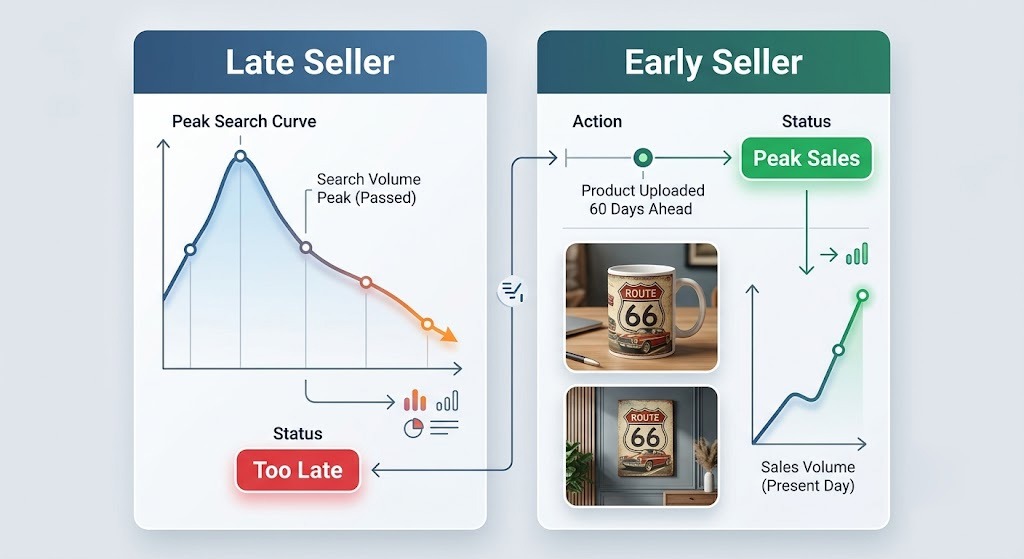
Unlike single-day events, Route 66's 100th anniversary runs the entire calendar year, which means it's still wide open heading into fall. It rewards vintage road-trip nostalgia, retro diner aesthetics, and "get your kicks" nostalgia bait for anyone who's ever driven cross-country or wants to.
This is also where home decor quietly outperforms apparel. A gallery-wrapped canvas with a minimalist Route 66 map becomes a keepsake rather than a t-shirt that fades in the wash, and it benefits from healthier margins than most standard apparel. Ceramic mugs suit "history nerd" humor for the morning coffee crowd, and a personalized tote bag lets you pair a road-trip route or hometown name with the anniversary angle for a made-for-me feel that a generic design can't match.
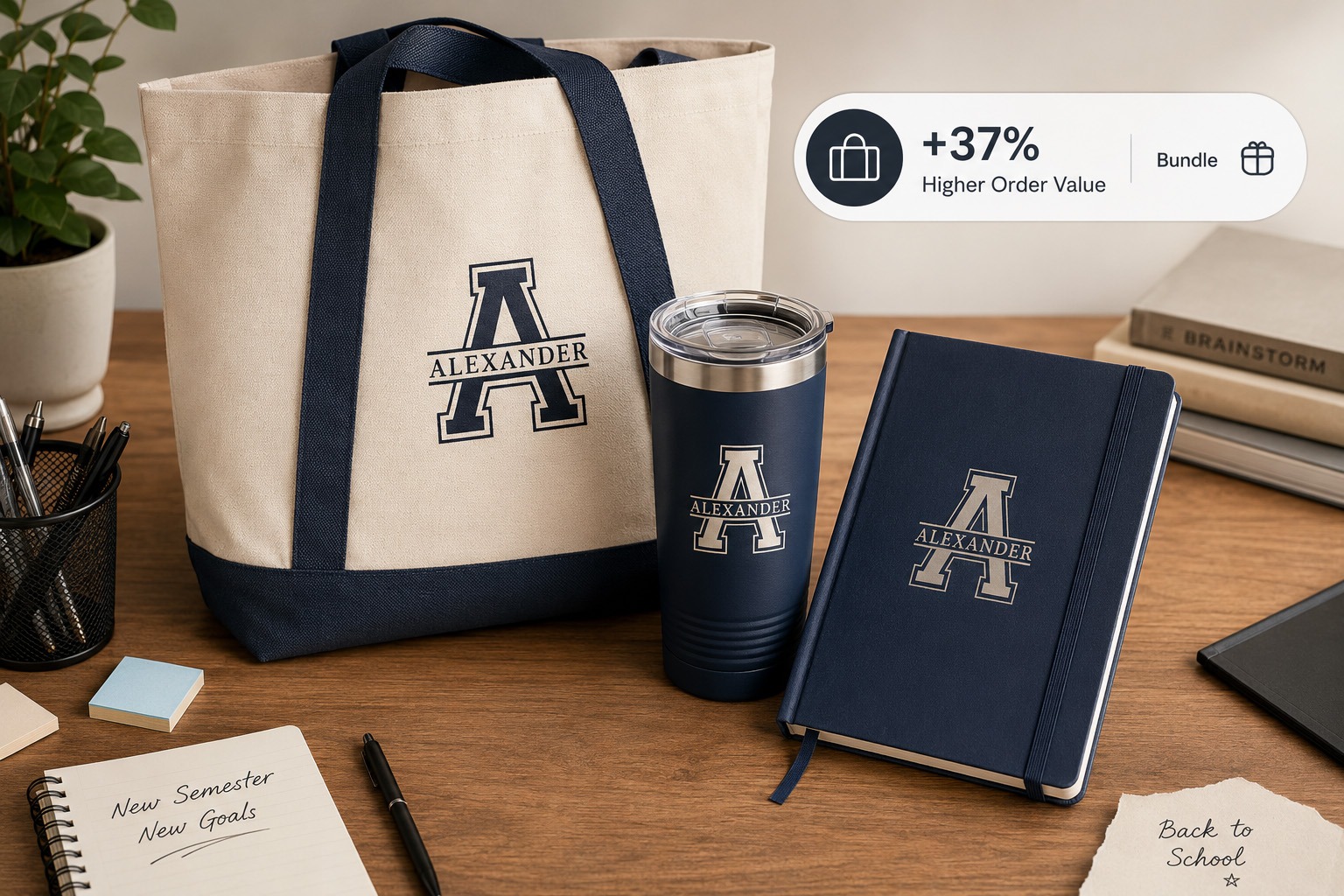
Here's the niche hiding in plain sight for anyone publishing in August: back-to-school. It's easy to overlook next to a headline event, but it's arguably the highest-intent shopping window of the entire year, and it's happening right now. K-12 back-to-school spending is on track to hit a record more than $43 billion this year, with families planning to spend an average of $863.86 on supplies, according to the National Retail Federation. Nearly two-thirds of consumers had already started shopping by early July, which means the window for new listings to catch that demand is open now, not in September.
The winning angle isn't a cute backpack design — every generic store already does that. It's matching sets: a tote bag, tumbler, and journal that all carry the same name, initials, or in-joke, so the buyer feels like they're building a whole identity, not just picking up one item. Personalization is worth leaning into here specifically — nearly three in four consumers are more likely to purchase from brands that deliver personalized experiences, and they spend 37% more with those brands, per Deloitte Digital research. A personalized tote bag does double duty for teachers and older students, and an insulated tumbler fits the "new school year, new routine" crowd. GearLaunch's own guide on formatting back-to-school listings for AI shopping assistants is worth a read if you want this niche to also surface in AI-powered search results.
The midterms are still roughly three months out, which means now is exactly when civic-themed merch should start going live — not in late October when every seller floods the same keywords. Play it safe here: this is not the lane for candidate names, party logos, or hot-button issues. It's the lane for civic energy — "go vote," "your voice, your vote," poll-worker appreciation — universal enough that shoppers across the political spectrum can buy the same design without blinking. Simple tees and tanks do the job; you don't need a complex product mix, you need message clarity and enough lead time to rank before November.
Not every niche needs to be tied to a date on the calendar, and that's exactly what makes pop culture and gaming worth keeping in rotation whenever a seasonal window is quiet. The catch is that the fastest way to get a storefront suspended is chasing specific movies, shows, or franchises directly. The winning approach is designing the feeling instead of the intellectual property: movie-night nostalgia, retro-gamer humor, genre-loyalist jokes for horror or sci-fi fans as a broad category rather than a single title. A big mouse pad taps directly into the remote-work-and-gaming crossover crowd that's grown alongside home offices and streaming setups, and because the niche isn't seasonal, it's one of the few product lines that performs steadily across every month covered in this guide.
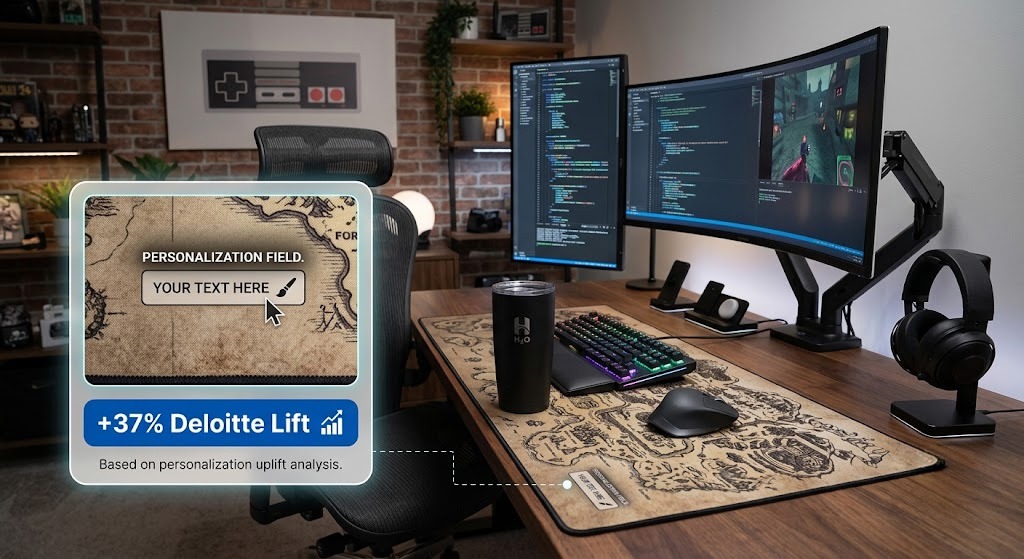
Whether you're building around Route 66, back-to-school, the midterms, gaming, or Q4, two rules decide whether any of it actually turns into sales.
Personalization is not optional. A name, a date, coordinates, a hometown — these function as emotional glue rather than decoration, and the Deloitte Digital data cited above holds across every niche in this guide, not just back-to-school. A generic canvas and a canvas with a customer's own road-trip route are the same production cost and a very different purchase decision.
Go small on purpose. The biggest wins in print-on-demand rarely come from serving broad categories like "history lovers" or "gamers." They come from serving specific, tightly defined groups — the Route 66 completionist, the matching-set parent, the poll-worker, the retro-gaming desk-setup enthusiast — because a design that speaks directly to one identifiable group will always outperform a design trying to appeal to everyone in a category.
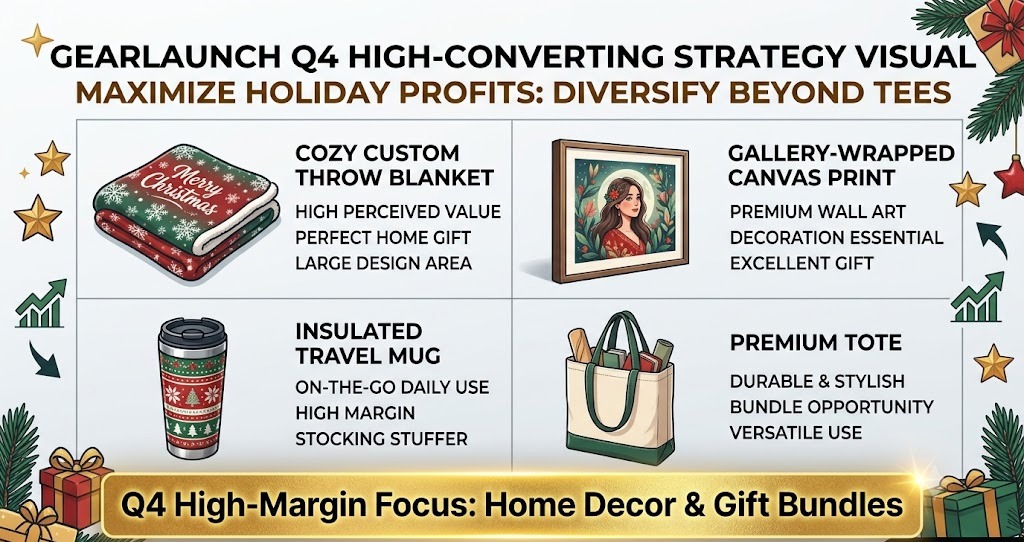
Here's the section that actually matters most right now. Halloween, Thanksgiving, Black Friday, Cyber Monday, and the winter gifting season all sit inside a 90-to-150-day window from today, and design, testing, and SEO all take time to work. Retailers already plan around this: roughly two out of every five holiday shoppers start browsing and buying before November, according to NRF data, and that share has only grown as retailers pull holiday campaigns earlier each year. Waiting until October to build a holiday catalog means showing up after the search spike instead of before it — the exact mistake that cost sellers ground on the World Cup and Olympics earlier this year.
One category ties Q4 together better than anything else: home decor. Wall art, minimalist maps, and blankets are the fastest-growing, highest-order-value segment in the GearLaunch catalog, and exactly what shoppers are hunting for as gifts. Combined with the personalization lift discussed above, a Q4 catalog built around personalized home decor — not just shirts — is where the real margin sits this year. GearLaunch's Q4 playbook on personalized gifts and the Holiday Selling Guide both walk through the specifics in more depth.
The pattern across every section here is the same: the sellers who win aren't the ones with the best idea, they're the ones who stopped waiting for a trend to arrive and started building before it did. Pick one niche from this guide, browse GearLaunch's full product catalog, and get a design live this week — not in October.
Ready to build your Q4 catalog? Explore GearLaunch's full product catalog or head straight to Create a Product and get your first design live today.
Is it too late to sell World Cup or Olympics merchandise in 2026? The tournament-week search spike has passed, but general sports fan culture is evergreen. A well-made supporter tee or fan-group tumbler can still sell steadily; just don't expect the launch-week surge that early sellers captured.
What's the best print-on-demand niche for an August 2026 launch? Back-to-school is the strongest immediate opportunity, since national spending data shows most shoppers are already buying by early July. Route 66's 100th anniversary is also still open since it runs the full calendar year.
When should POD sellers start preparing for Q4 holiday sales? Aim for 60 to 90 days before the moment you're targeting. Since Halloween through the winter gifting season falls in a 90-to-150-day window from an August launch, design and listing work should start now rather than in October.
Do personalized products actually convert better than generic designs? Yes. Consumers who receive personalized experiences are significantly more likely to purchase and tend to spend more per order compared to those who don't, based on Deloitte Digital's brand research.
Is it safe to sell midterm election-themed products? Yes, if you stick to civic energy — voting encouragement, poll-worker appreciation — rather than candidate names, party logos, or hot-button issues. Keep messaging universal enough that shoppers across the political spectrum would buy it.
Can I sell pop culture or gaming merchandise without a trademark problem? Yes, as long as you design around the feeling of a genre or hobby rather than a specific franchise, movie, or game title. Generic gamer humor and genre-loyalist designs are safe; using a studio's characters, logos, or exact imagery is not.
What's the single biggest factor in whether a print-on-demand niche converts? Personalization and audience specificity matter more than the niche itself. A design built for a narrow, well-defined group — rather than a broad category — combined with a name, date, or detail unique to the buyer consistently outperforms generic versions of the same product.


.svg)
.svg)
.svg)