Products


Most sellers treat Q4 as one long sale. It isn't. The holiday season brings two very different shoppers, and each one needs a different store, a different message, and a different offer. Sellers who plan for both can stay busy from the first Black Friday deal to the last Christmas order, and still head into January without burning out.

Wave 1 is the Deal Hunters in November. These shoppers arrive around Black Friday and Cyber Monday with multiple tabs open. They browse, compare, and wait for the right offer.
Wave 2 is the Panic Gifters in December. These shoppers are short on time. They want a thoughtful gift that arrives before the holiday, and they will buy from whoever makes the deadline and the checkout feel easy.
Your job is to stop the scroll in November and remove every doubt in December. For a seasonal timeline that covers both, see the Holiday Selling Guides in the GearLaunch Seller Hub.

Deal hunters are comparing options quickly, so your listing has seconds to earn a second look. Black Friday falls on November 27, 2026, and Cyber Monday on November 30, so your November setup should be live before then. Our Black Friday & Cyber Monday 2026 guide covers the full weekend plan.
1. Stop the scroll with strong mockups
Your first image does most of the selling. Use clean, high-quality mockups that show the product in real life, such as a hoodie being worn or a blanket draped over a sofa, so shoppers understand what they're getting at a glance, even on a phone screen.
2. Build smart bundles
Deal hunters respond to value they can see. A cozy-night-in set that pairs a unisex hoodie with a blanket and a tumbler gives them a reason to buy more than one item. GearLaunch's Promotions tab lets you set up percentage-off codes and a Free Shipping Over $X threshold without a third-party app, and campaign-level upsell discounts can add a matching accessory at checkout. Our Pre-Q4 Offer Architecture guide walks through bundles you can build today.
3. Offer designs they can't find anywhere else
When shoppers compare identical-looking products, price becomes the only difference. A specific, niche design (Christmas for nurses, dog lovers, or coffee addicts, for example) gives them a reason to choose you instead of the cheapest option.
Panic gifters aren't hunting for the lowest price. They want the gift to arrive on time and feel considered. That changes what your store has to do.
1. Make shipping cut-offs impossible to miss
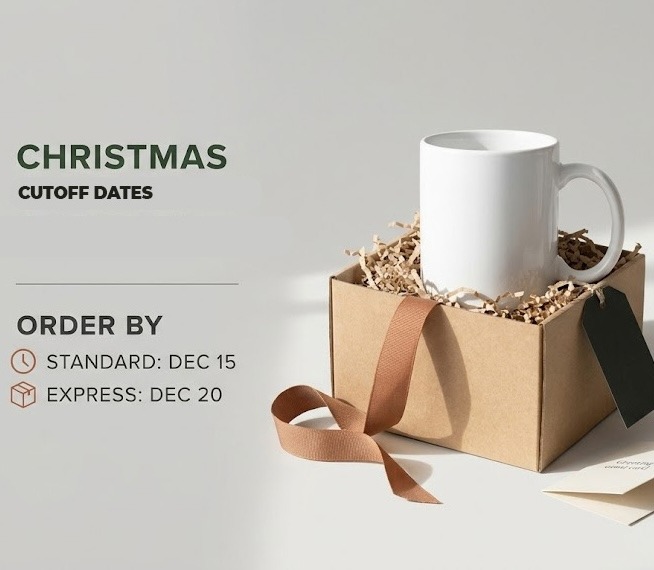
Over-communicate your deadlines. Put them in a site banner, in each product description, and in your automated messages, such as the cart recovery emails you can enable in your store's email settings. Calculate your dates from production time plus transit time, and only promise what you can deliver. A clear "order by" date builds more trust than a vague promise, and it protects your reputation during the busiest weeks. Our Christmas & New Year game plan includes a week-by-week December timeline.
2. Remove friction from the buying experience
Last-minute shoppers abandon anything confusing. Keep variations simple, write short product descriptions that say who the gift is for, and test your store from product page to checkout on your own phone before December starts.
3. Lead with personalization
Personalization is the biggest lever you have for turning a standard product into a gift that feels thoughtful. Names, dates, and short messages make an item impossible to find on a store shelf. GearLaunch's personalization fields let you offer these options on supported products, so a plain mug becomes "the one with my daughter's name on it."
The advantage of selling this on GearLaunch is that you can test a full holiday lineup with no upfront costs and no inventory. If a product doesn’t sell, you haven’t tied up money in stock. That lets you add more gift-ready products in November and double down on the winners in December.
1. Cozy apparel
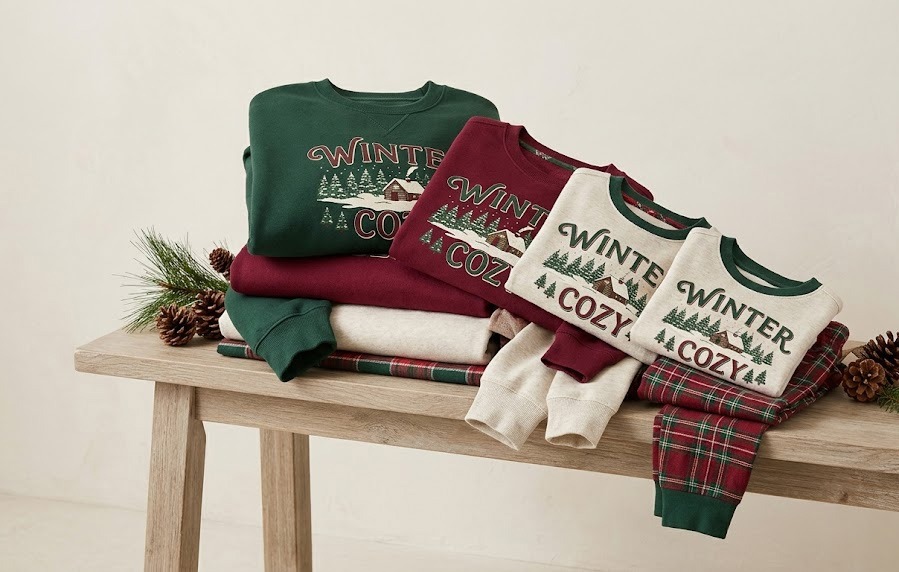
Lead with comfort in November, then shift toward holiday wear in December. Hoodies and sweatshirts suit early deal hunters who want something warm and easy to wear. For December, GearLaunch’s all-over-print catalog has separate categories for women’s pajamas, men’s pajamas and robes, and kids’ clothing. You can apply one holiday design across the whole family and sell it as a matching set for gifting and photos, all from a single platform.
2. Ornaments

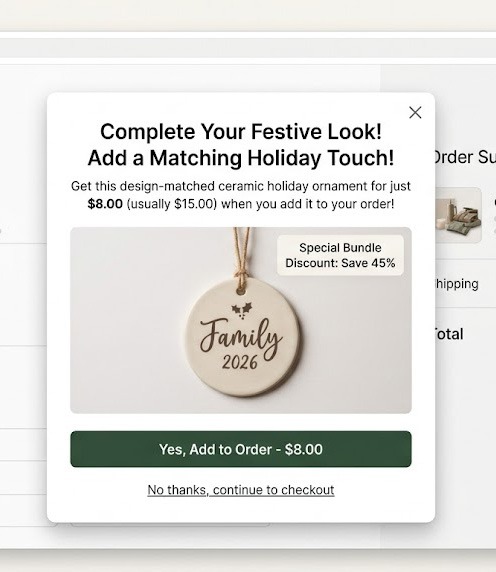
Ornaments are the quiet performer of the season. They’re small, easy to gift, and simple to add to any cart. GearLaunch’s personalization fields let you offer a family name, a date, or a short message, which turns a generic ornament into a keepsake. Browse the ornament category and build a “Family 2026” design. GearLaunch also surfaces related campaigns at checkout automatically, so a design-matched mug or blanket can appear next to the ornament without extra setup.
3. Drinkware and cozy home items
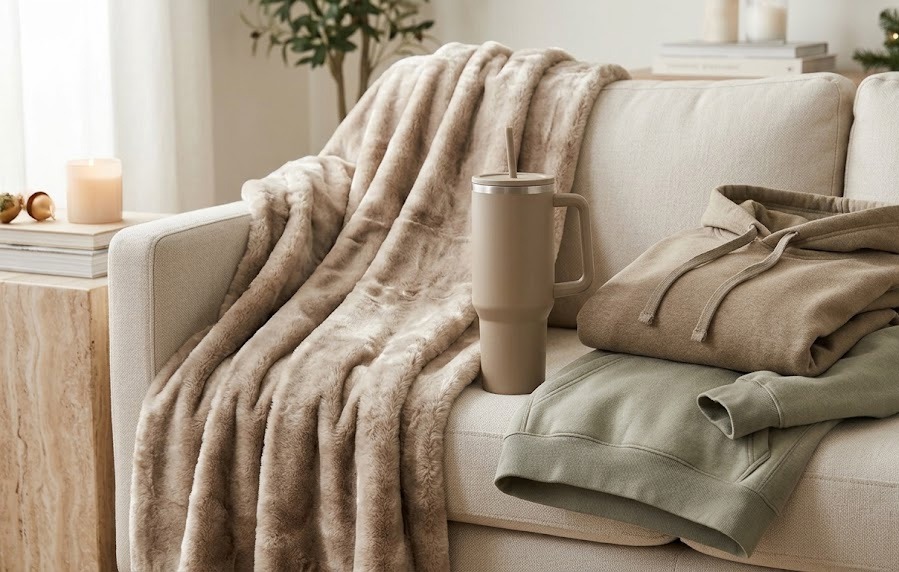
Mugs and tumblers are easy add-ons and work well in bundles. Two ready-made combinations from our Pre-Q4 guide fit this season:
You don’t need to shout to get attention in Q4. The aim is to make each offer feel relevant and easy to say yes to. These GearLaunch tools help you do that without paying for a third-party app.
1. Replace sitewide blasts with targeted offers
In your Promotions tab you can build percentage-off codes and a Free Shipping Over $X code, then assign each one to specific campaigns. A bundle code on your cozy set speaks to deal hunters, while a free shipping threshold nudges a gifter to add a second item. Turn on campaign-level upsell discounts to offer a design-matched add-on at the moment of purchase. Our Pre-Q4 Offer Architecture guide shows how to set these up.
2. Write subject lines with a purpose
Match the message to the wave. In November, try “Your cozy gift set is ready, save when you buy two.” In December, try “Gifts for the coffee lover on your list: order by [date].” Both beat “Huge Sale!!!” because they tell the shopper exactly why to open the email. You can also enable GearLaunch’s automated cart recovery emails and pair them with an incentive code. This re-engages shoppers who already visited your store, so you aren’t paying again for that traffic.
3. Show the gift moment
Create social content around wrapping, unboxing, and the reaction rather than product shots alone. Ordering a sample of your best seller is a simple way to get authentic lifestyle photos and video, which many successful GearLaunch sellers do. It also lets you check the quality before you promote the product.
4. Measure, then double down
Open Campaign Stats and use the “Show Upsells” view to see which pairings convert and which sit at zero. If a pairing hasn’t sold in two weeks, swap it out. GearLaunch’s tipping feature at checkout also gives satisfied customers a way to leave something extra on top of your regular profit, so quick, warm service during the rush can pay off directly. If you want to go deeper, GearLaunch Academy has courses on pricing, design, and holiday marketing.
What are the two holiday shopping waves for print-on-demand sellers? The first wave is November's deal hunters, who browse and compare around Black Friday and Cyber Monday. The second is December's last-minute gifters, who want a thoughtful gift that arrives on time.
When should I switch from deal messaging to gift messaging? Shift once Cyber Monday (November 30, 2026) passes. At that point, lead with gift ideas, personalization, and your order-by dates instead of discounts.
Which products are best for last-minute holiday gifts? Personalized ornaments, mugs, blankets, and cozy apparel such as hoodies and pajamas are easy to gift and easy to understand at a glance.
How do I avoid holiday shipping complaints? State your cut-off dates in your banner, product descriptions, and automated emails, and base them on your production and transit times so you only promise what you can deliver.
Plan for both waves and you'll turn one busy season into two. Browse the full GearLaunch product catalog to build your lineup, then head to Create a Product to get your holiday collection live.