Products

.svg)


.svg)


Gen Z doesn't Google anymore — they ask. And if your product listings aren't built to answer, you're invisible.
A student shopping for college gear isn't typing "best backpacks" into a search bar. They're opening ChatGPT or Perplexity and asking: "I need a water-resistant, minimalist backpack for college with a 16-inch laptop sleeve, a hidden pocket, and free shipping under $80 — what should I get?" The AI pulls from structured, specific product pages. If yours only says "perfect for students on the go," it gets skipped entirely.
That's the core problem Answer Engine Optimization (AEO) solves — and for print-on-demand sellers heading into back-to-school season, mastering it now is a direct revenue decision.
The generational data is clear. According to Suzy's AI Impact on 2025 Holiday Shopping report, Gen Z AI shopping adoption sits at 85%, with 92% using AI to compare prices before buying. A PayPal 2025 Holiday Shopping Survey confirms that 61% of Gen Z shoppers actively used AI tools to assist with a purchase in the past year. And IESE Business School research found that 7 in 10 Gen Z shoppers have used generative AI — ChatGPT, Gemini, or Copilot — to research a purchase.
The shift isn't hypothetical. AI-referred visitors to retail sites bounce 33% less often and spend 45% more time exploring products than visitors from traditional search channels, according to Ringly's 2026 generative AI ecommerce statistics report. These are high-intent shoppers who are ready to buy. The brands that show up in AI recommendations win them by default.
For POD sellers, the window to act is right now — before the back-to-school rush peaks.
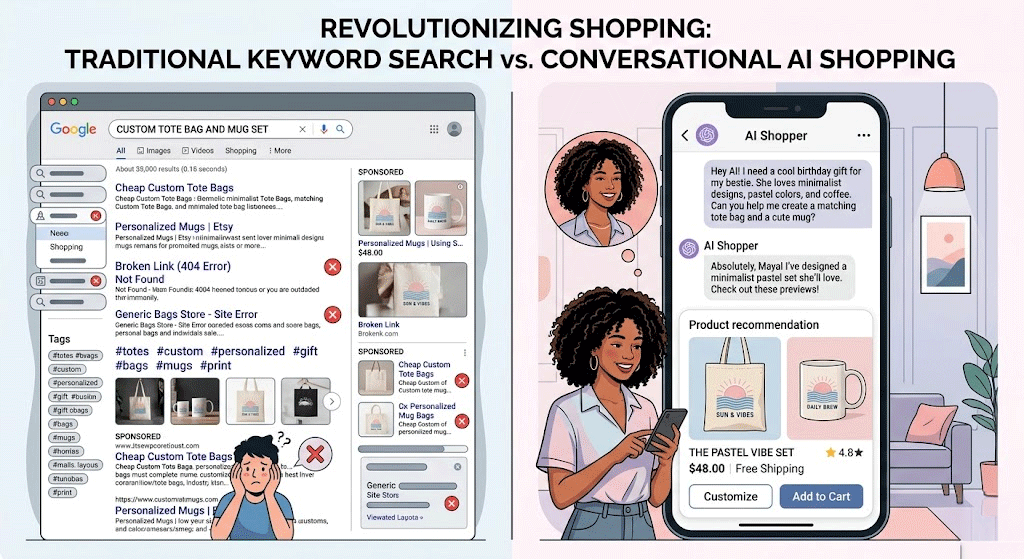
Traditional SEO optimizes for keywords and backlink signals so your page ranks on Google. AEO is different: it optimizes for intent and structure so an AI assistant can extract your product's exact specs and match them to a shopper's conversational query in real time.
The difference shows up fast in product descriptions. Vague marketing copy ("designed with students in mind!") gives an AI nothing to work with. Precise, scannable specs give it everything. When a student asks for a 25-liter, water-resistant bag under $80, the AI needs to find those numbers explicitly stated — not implied through lifestyle language.
Three things drive AEO performance for back-to-school listings:
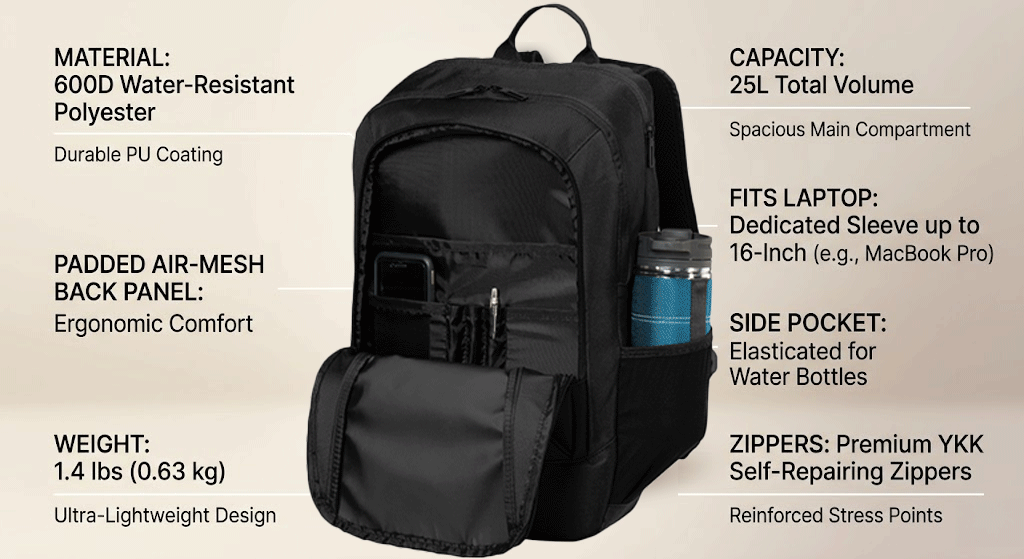
Scannable technical specifications. Every dimension, material, weight, capacity, and feature should be explicitly stated. AI engines parse structured facts, not storytelling. A product page that states "600D water-resistant polyester, 25L capacity, fits 16-inch laptops, 1.4 lbs" will always outperform one that says "plenty of room for all your gear."
Conversational intent matching. Gen Z uses aesthetic and vibe language when they shop: minimalist, y2k, utility, cottagecore, clean girl. Build those descriptors directly into your product copy alongside functional specs. When someone asks for a "minimalist sage green tote for college," your listing should use those exact words — not assume the shopper will filter through generic color swatches.
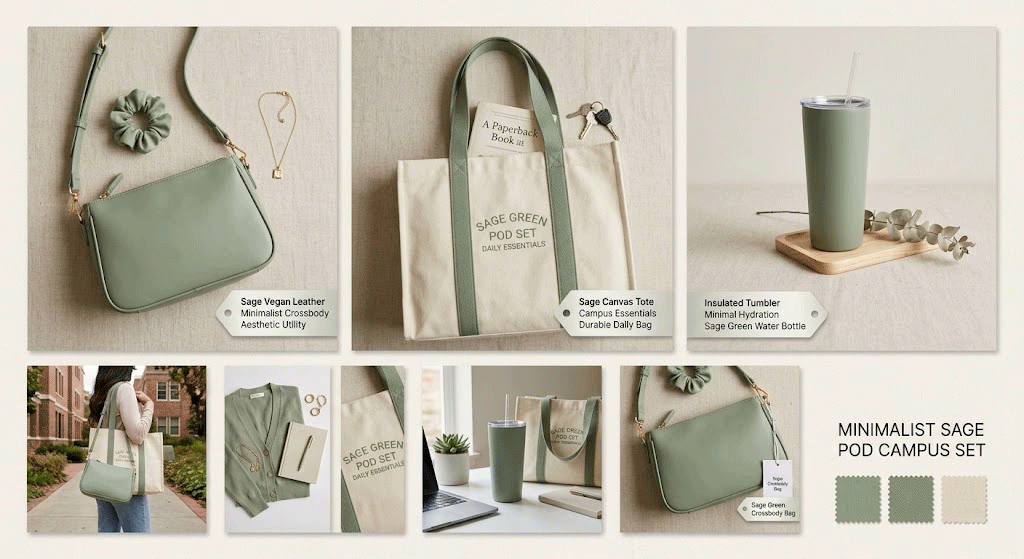
Strategic internal linking. AI crawlers map your catalog through internal links. If your backpack page links naturally to your bags for organization collection, your hats lineup, or your mugs and tumblers, the AI treats those items as related and can recommend them as a bundle — boosting average order value without any extra ad spend.
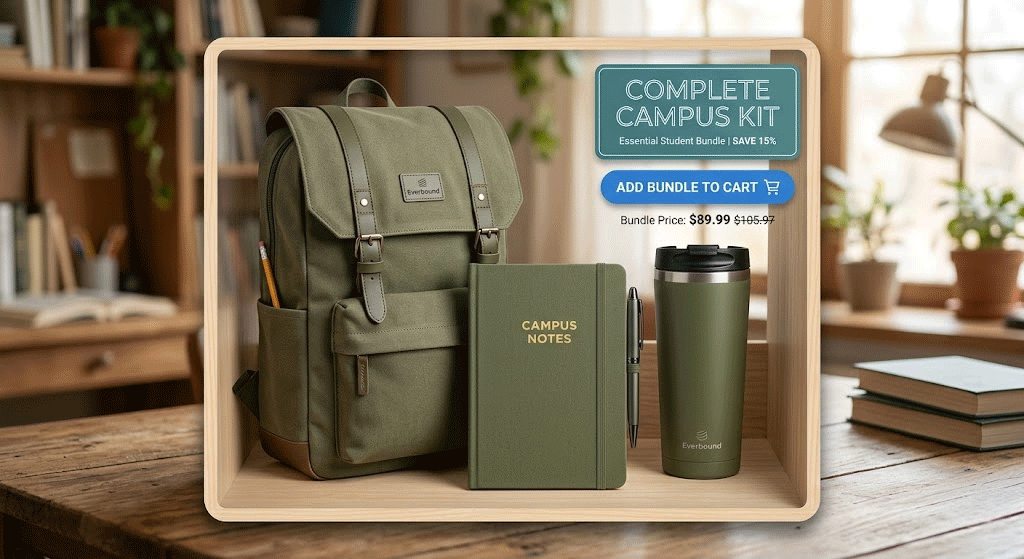
Here's what an AI-optimized back-to-school product listing looks like in practice, using a backpack as the example.
Headline: All-Day Ergonomic College Backpack — Water-Resistant, 25L, Fits 16-Inch Laptops
Opening paragraph: Lead with the problem you solve, not a tagline. "Built for heavy academic commutes, this minimalist student daypack combines ergonomic support with organized storage for tech, stationery, and daily essentials — all in a lightweight, water-resistant shell."
Specifications block: State every measurable fact as a standalone line. Dimensions, weight, capacity, material composition, laptop compatibility, colorways. No prose, no fluff — just the data an AI can extract and match to a query.
Feature descriptions: Name each feature explicitly and explain the practical benefit in one sentence. "Hidden anti-theft back pocket: keeps your phone and keys secure and out of reach during crowded campus commutes." Functional clarity beats clever copy every time.
Style and aesthetic tags: Include the visual language Gen Z uses when searching. "Minimalist aesthetic," "clean utility design," "campus-ready streetwear pairing." These exact phrases are what show up in AI prompts — and what pulls your listing into the recommendation.
Care and compatibility details: AI assistants often answer follow-up questions like "is it machine washable?" or "will it fit a MacBook Pro?" Make sure those answers are in your listing before the question gets asked.
For POD sellers building their catalog, GearLaunch's bags for organization and fashion handbags categories are natural starting points for back-to-school AEO campaigns. Pair them with custom-printed mugs and tumblers for bundle-ready listings that AI assistants can recommend as a complete campus kit.
Structured text descriptions do the heavy lifting, but JSON-LD schema markup is what confirms your product data to AI crawlers at the technical level. At minimum, every product page should include @type: Product, the exact product name, a feature-rich description, pricing with currency, availability status, and a SKU or MPN that cross-references with third-party review platforms.
Without schema, your well-written listing still has to compete with pages that have both. With it, your product data becomes unambiguous — and unambiguous data is what AI engines prefer to cite.
If you're building your first AEO-ready store or scaling an existing POD catalog, the GearLaunch back-to-school selling guide covers the product selection decisions that set you up before you write a single description. And once your listings are live, create a product on GearLaunch to start building an AI-discoverable catalog from the ground up.
What is Answer Engine Optimization (AEO)? AEO is the practice of structuring and writing product content so conversational AI tools — ChatGPT, Perplexity, Gemini — can retrieve and recommend it in response to specific shopper queries. Unlike traditional SEO, which focuses on keyword ranking in search results, AEO focuses on data precision and intent matching so AI assistants choose your product when a shopper describes exactly what they need.
How is AEO different from SEO for e-commerce brands? SEO optimizes for how a search engine ranks your page. AEO optimizes for how an AI assistant reads and uses your page. The two overlap in some areas — clear structure and good content help both — but AEO specifically requires explicit technical specs, conversational language, and schema markup that SEO alone doesn't prioritize.
Why does Gen Z use AI for shopping instead of traditional search? Gen Z shops conversationally. Rather than sorting through sponsored links and filter menus, they describe exactly what they want — aesthetic, price, specs, shipping speed — and get an instant curated shortlist. AI tools collapse a 30-minute research session into a two-sentence exchange. For brands, that means the shopper arrives already pre-sold on what they need; winning the recommendation is winning the sale.
How do internal links affect AI recommendations? AI crawlers use internal linking structures to understand which products are related and how your catalog is organized. When your product pages link naturally to complementary items — a backpack to a tote, a tumbler to a mug set — AI assistants can surface those combinations as bundles or alternatives, increasing your visibility across multiple query types and boosting average order value.
What's the fastest way for a POD seller to start with AEO? Pick your three highest-priority back-to-school SKUs and rewrite their descriptions using explicit specs, aesthetic language, and a clear features list. Add JSON-LD schema markup to each page. Then ensure those pages link contextually to related products in your catalog. That's the core AEO stack — and it's enough to meaningfully increase your chances of appearing in AI-generated back-to-school recommendations this season.
Ready to build a catalog that AI assistants actually recommend? Browse the full GearLaunch product catalog to find your best-fit back-to-school SKUs, then create your first AEO-ready product and get ahead of the fall rush.


.svg)
.svg)
.svg)