Products

.svg)


.svg)


Summer has barely started, but the most profitable back-to-school window is already open. For print-on-demand sellers, waiting until August to refresh your catalog isn't a strategy — it's a concession to your competitors. The academic shopping cycle has shifted. Early-bird buyers are actively researching, saving, and spending in June, and the sellers who launch now capture that demand before ad platforms get expensive.
Here's how to build a high-converting back-to-school collection and why doing it today gives you a decisive edge.
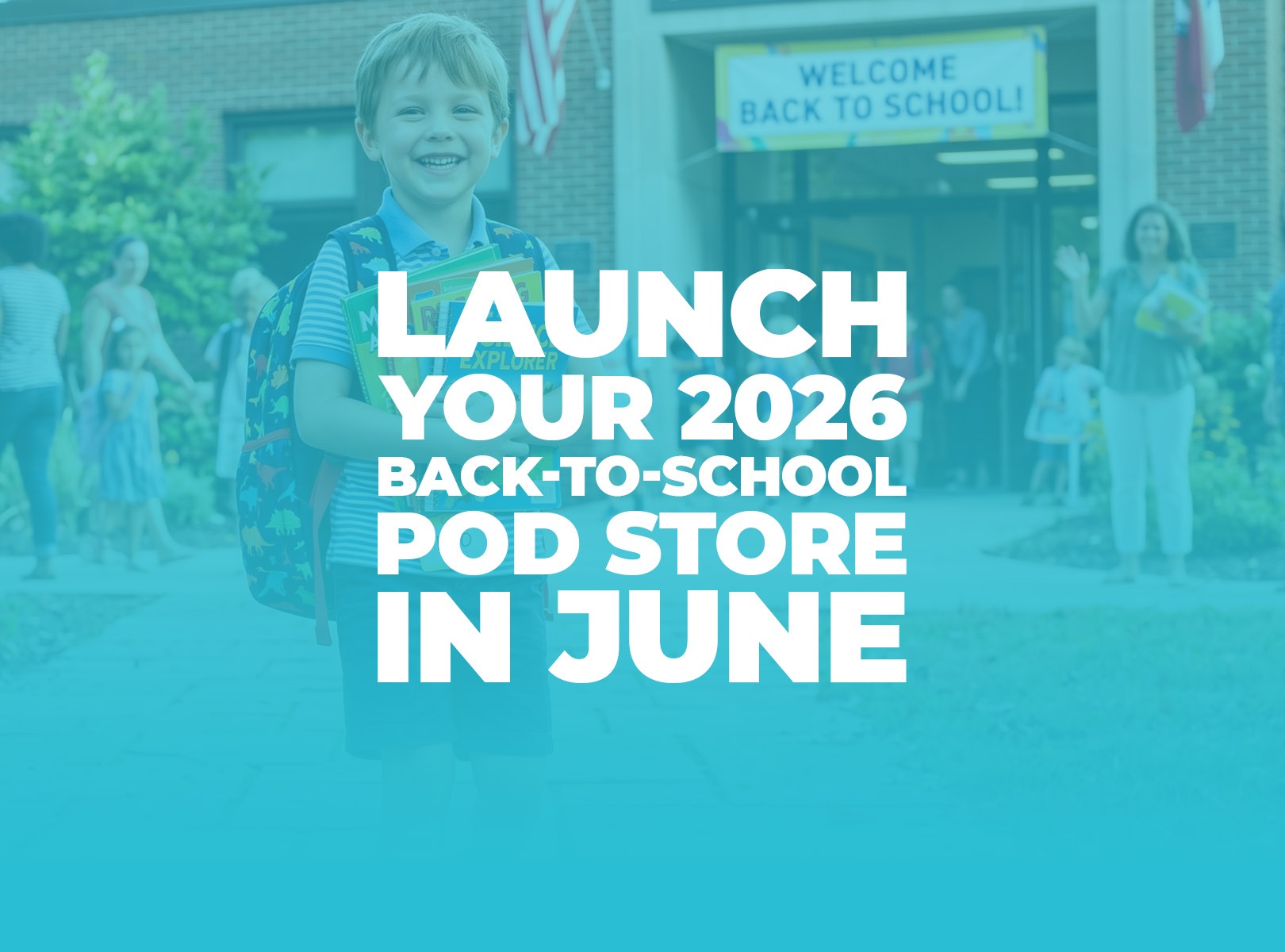
The back-to-school season is no longer a single late-summer sprint. According to a 2025 Zeta survey, 25% of parents planned to shop in June — up significantly from 14% the prior year, while the share shopping in August dropped sharply. Separately, the National Retail Federation found that 67% of shoppers had already started purchasing back-to-school supplies by early July 2025.
This isn't a fringe behavior — it's the new normal. Incoming university students and high schoolers use early summer to plan their "aesthetic" for the year ahead, heavily influenced by social media mood boards, YouTube unboxing videos, and TikTok hauls. Google Trends data shows that worldwide search interest in "school supplies" began accelerating as early as May in 2025, a full month ahead of the prior year's spike.
Launching your collection in June means your products appear when this research phase begins — not after it's over.
Running paid campaigns in June isn't just about spending less — it's about building the audience infrastructure that makes your August campaigns actually work. Most POD sellers treat advertising as a tap they turn on when demand peaks. The sellers who consistently win treat it as a pipeline they fill weeks in advance.
The Cost Gap Is Real
Ad platform costs follow a predictable seasonal curve, and back-to-school is a documented pressure point. Back-to-school season (July through August) drives ad costs on Meta 15–25% higher as brands across fashion, education, and consumer goods flood the auction simultaneously. On TikTok, the same dynamic holds: back-to-school campaigns create elevated costs in education, fashion, and technology verticals, and planning campaigns before peak competition helps secure better placement rates.
The underlying mechanism is auction pressure. Every dollar a national retailer adds to its back-to-school budget raises the floor cost for everyone else targeting similar audiences. June sits outside that pressure window. U.S. Meta CPCs in June 2025 averaged $1.23 — meaningfully lower than the July–August stretch, and well below November's peak of $1.46. For education-adjacent categories specifically, the biggest single-month CPC jump of 2025 was the +$0.15 spike from June to July — exactly the cliff you want to be positioned ahead of, not scrambling to climb.
The practical implication: a June campaign reaching 10,000 targeted shoppers will cost you meaningfully less than the same reach in August. That margin is yours to reinvest in product development, discounts, or simply more impressions.
The Pixel Data Argument
Lower CPCs are only half the story. The more durable advantage of launching in June is what it does to your retargeting infrastructure heading into peak season.
Meta's algorithm needs data to optimize. A campaign launched cold in August — with no prior event history, no warm audiences, and no purchase signal — asks the algorithm to learn from scratch at the exact moment bidding is most expensive. That combination produces the worst possible ROAS: you're paying peak prices for the system's least efficient early learning period.
Launching in June flips this. Every ViewContent, AddToCart, and Purchase event your June campaigns generate feeds your pixel and trains Meta's system on what a high-intent buyer looks like for your specific products. By the time August arrives, you're not bidding on cold audiences — you're running retargeting campaigns against people who already engaged with your store, at a documented 2–5x ROAS advantage over cold prospecting. Warm audiences convert at significantly higher rates because they already know your brand; returning visitors are roughly 70% more likely to convert, and that signal compounds the longer your pixel has been collecting data.
There's also a lookalike audience angle. June buyers give you a real customer list to build Lookalike Audiences from. A lookalike built on 500 verified purchasers will outperform a lookalike built on website visitors alone — and you can't build that purchaser list without June sales. The sellers who spend August running lookalike campaigns off their June customer data are playing a fundamentally different game than those starting from zero.
What to Run in June
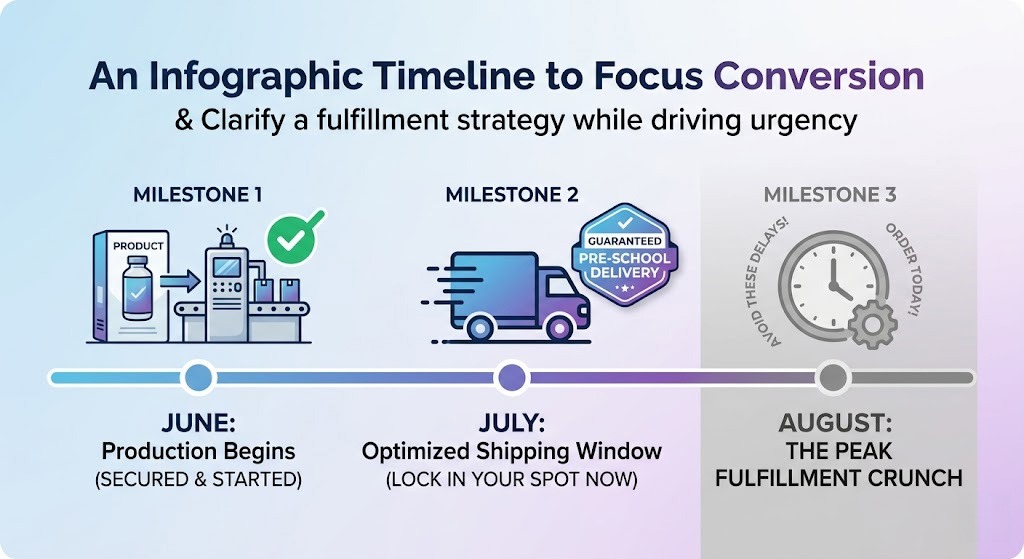
Not every June campaign needs to be a full conversion push. Think of the month in two phases.
The first two weeks are best used for broad awareness and engagement: video ads showcasing your collection, add-to-cart traffic campaigns, and any UGC or lifestyle content that gets your brand in front of the right audiences cheaply. The goal here is data collection and audience building, not immediate ROAS. Costs are low; let the algorithm learn.
From mid-June onward, shift to conversion-optimized campaigns targeting the warm audiences you've built. By this point your pixel has enough signal to start identifying high-intent buyers, and you can run retargeting against cart abandoners and product viewers with confidence. This is also when "early bird" promotional hooks — shipping guarantee deadlines, limited-edition summer drops, early discount windows — start converting meaningfully.
By the time August ad costs spike, you'll have a seasoned pixel, a warm retargeting audience, a lookalike pool built on real buyers, and creative that's already been tested and optimized. Your competitors launching fresh in August have none of that.
Custom print-on-demand products require real lead time. When order volume spikes across the industry in August, production queues back up, transit times stretch, and on-time delivery becomes harder to guarantee. Capturing orders throughout June smooths your fulfillment curve and lets customers receive their gear before the school year starts — building the kind of loyalty that generates repeat business and UGC reviews.
Those June fulfillment cycles also pay a second dividend: by mid-July, you'll have real product photos, customer reviews, and unboxing content to fuel your retargeting campaigns as the wider back-to-school rush kicks in.
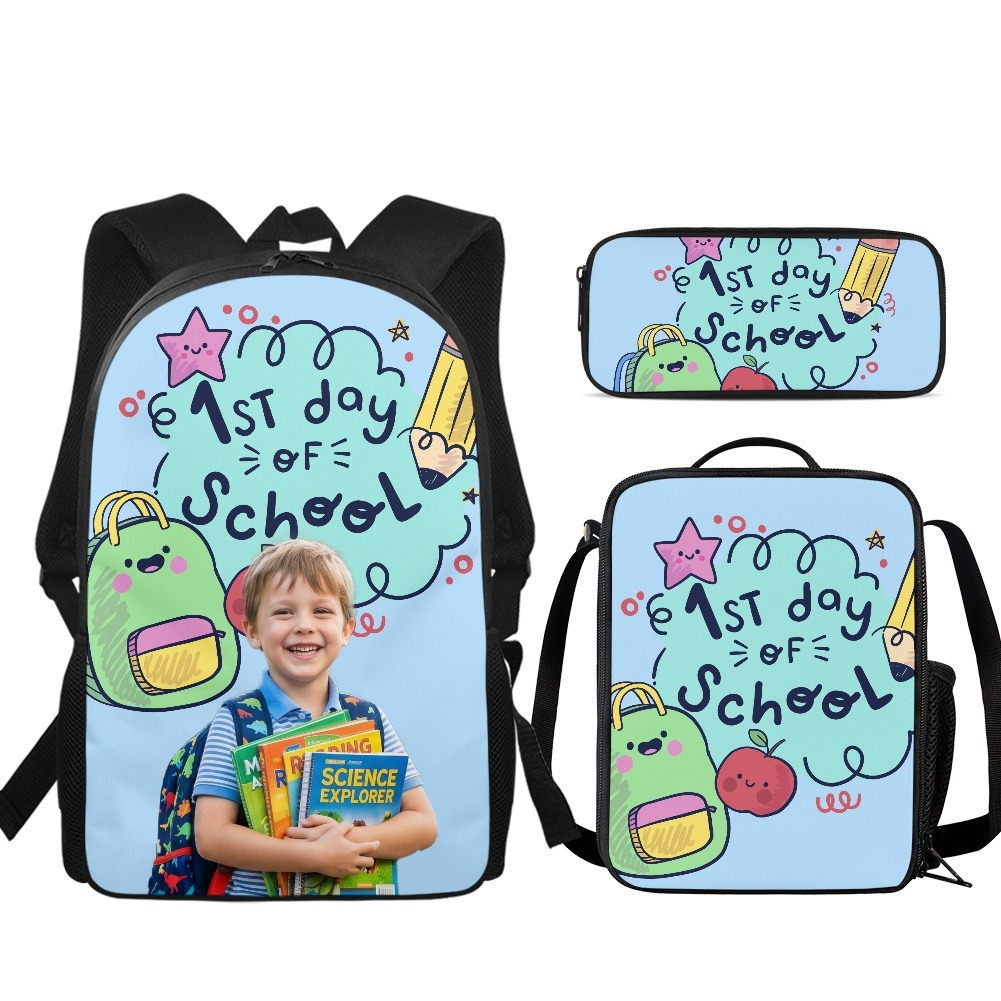
The most effective back-to-school storefronts combine functional utility with strong niche design. Students aren't just buying supplies — they're buying identity. Here's where to focus.
Bags and organizational gear are the anchor of any BTS collection. The Backpack, Lunch Bag, and Pencil Case Combination Set is purpose-built for bundle selling — a single SKU that hits all three essentials and naturally raises your average order value. Pair it with a standalone Leather Pencil Case as a high-margin add-on impulse item, or position the Portable Laptop Bag as a premium upgrade for university students. Browse the full Bags for Organization category for additional options to build out your catalog.
Campus lifestyle apparel gives students the identity-driven items they actually want to wear. Adult High Top Canvas Shoes with all-over print designs are a strong performer for subculture-specific niches — cottagecore, streetwear, gothic aesthetics, and anime fandoms all convert well on this format. A Cloth Tote Bag is the everyday campus carry item that students actually use, making it an easy cross-sell alongside any apparel purchase. The Canvas Shoes category has additional silhouettes worth testing against your niche.
Phase 1 — Niche Discovery. Resist generic "back to school" taglines. The sellers who win are the ones who design for a specific person: the nursing student who needs a custom tote for clinicals, the architecture major who wants a themed pencil case, the dorm-move-in freshman who wants a matching bag set in a specific aesthetic. Narrow niches outperform broad appeals at every stage of the funnel.
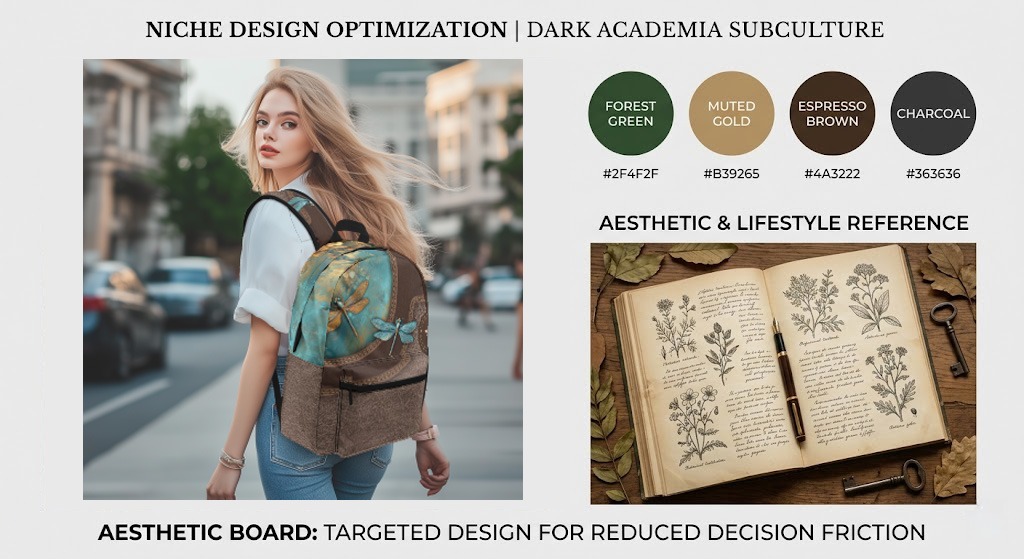
Phase 2 — Build Product Ecosystems. Don't sell individual items — sell coordinated collections. A matching backpack-and-pencil-case bundle in the same design language is a much easier sell than two separate listings. The GearLaunch Product Selling Guide has practical frameworks for structuring collections that increase AOV without requiring new design work.
Phase 3 — Run Early-Bird Promotions. Structure your copy around proactive planning. An offer like "Lock in your look now — beat August shipping delays and save 10–15%" speaks directly to the value-conscious, plan-ahead shopper that's already active in June. This framing also differentiates you from the promotional noise that hits in August when every competitor is running the same discount.
Phase 4 — Collect UGC for Retargeting. The orders that fulfill in June and early July become your creative assets for August. Encourage customers to share photos, tag your store, and leave reviews. This organic social proof becomes your highest-performing retargeting creative at exactly the moment when ad competition peaks. For more on how to leverage UGC, see the GearLaunch blog post on Back-to-School selling.
Is June really early enough to see back-to-school sales? Yes — and increasingly, June is when the highest-intent early buyers are most active. Zeta's 2025 survey data shows the share of parents shopping in June nearly doubled year-over-year, while August's share dropped significantly. Launching in June means you're capturing those early buyers before competitors have even updated their catalogs.
Why prioritize product bundles over single items for back-to-school? Bundles like a matched backpack, lunch bag, and pencil case set increase your average order value without raising customer acquisition costs. Parents shopping for multiple children especially respond to coordinated, one-stop-shop solutions. A bundle also reduces comparison shopping — once a customer is in a cohesive collection, there's less reason to look elsewhere.
How do POD sellers protect margins during a high-competition season? By launching in June, you run campaigns before ad platforms become saturated. Lower CPCs in early summer, combined with cross-sell strategies — pairing a sweatshirt with back-to-school accessories, for example — keep acquisition costs manageable while the broader market is still quiet.
What design approach works best for student demographics? Hyper-specific niche targeting consistently outperforms broad appeal. Design for a specific major, hobby, aesthetic subculture, or campus identity rather than generic "student" messaging. A bag designed for veterinary students will convert far better than one that says "college life" — even though the vet student audience is smaller.
How early should I start running paid ads for back-to-school? Ideally, launch your first campaigns in early to mid-June. The goal isn't necessarily peak sales volume at that stage — it's data collection. Building pixel history and audience segments through June means your August campaigns launch with established performance baselines instead of starting cold.
Browse the full GearLaunch all-over-print catalog to find the right product mix for your 2026 back-to-school collection, then head to Create a Product to get your designs live before the window closes.


.svg)
.svg)
.svg)