Products

.svg)


.svg)


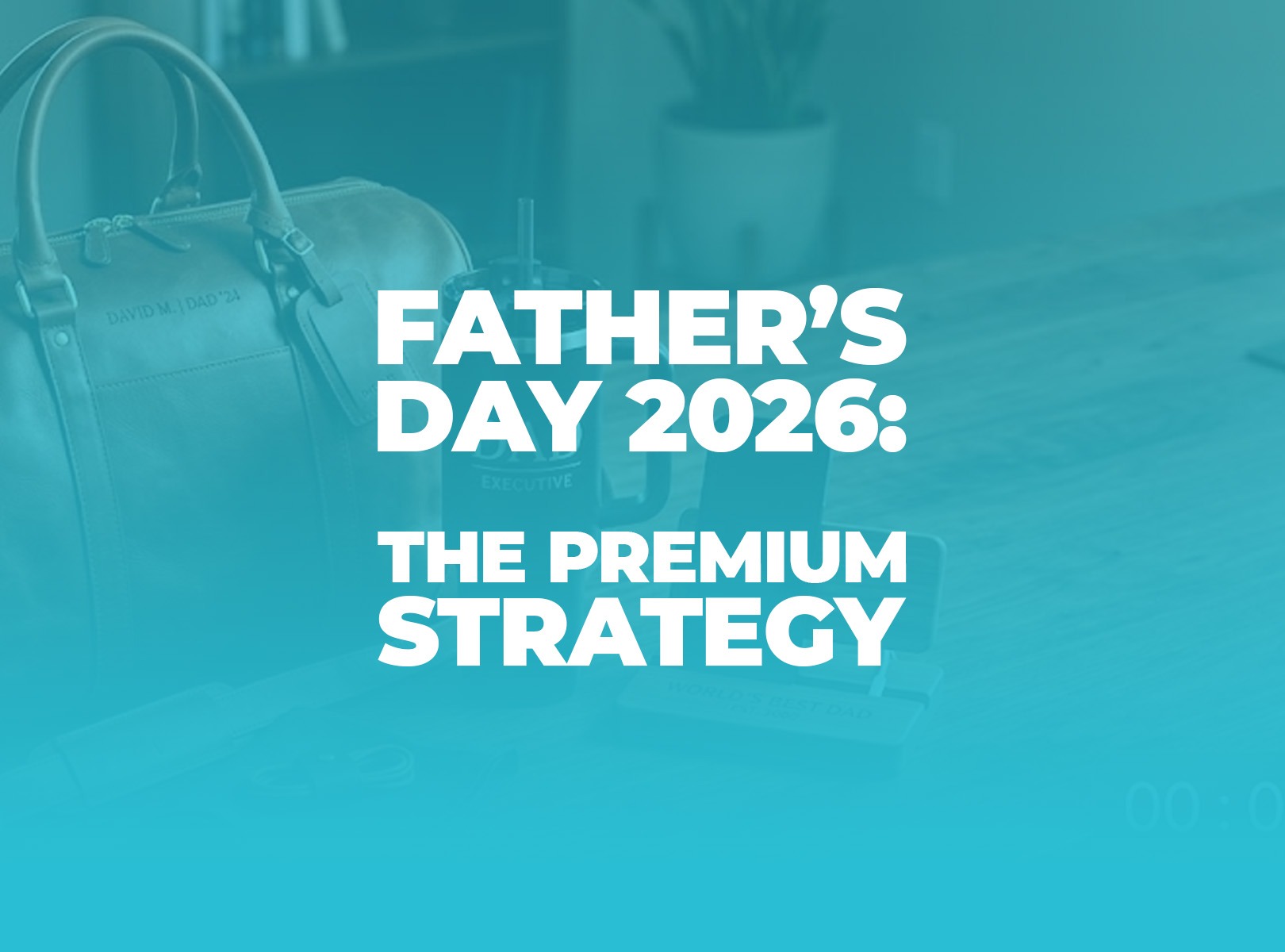
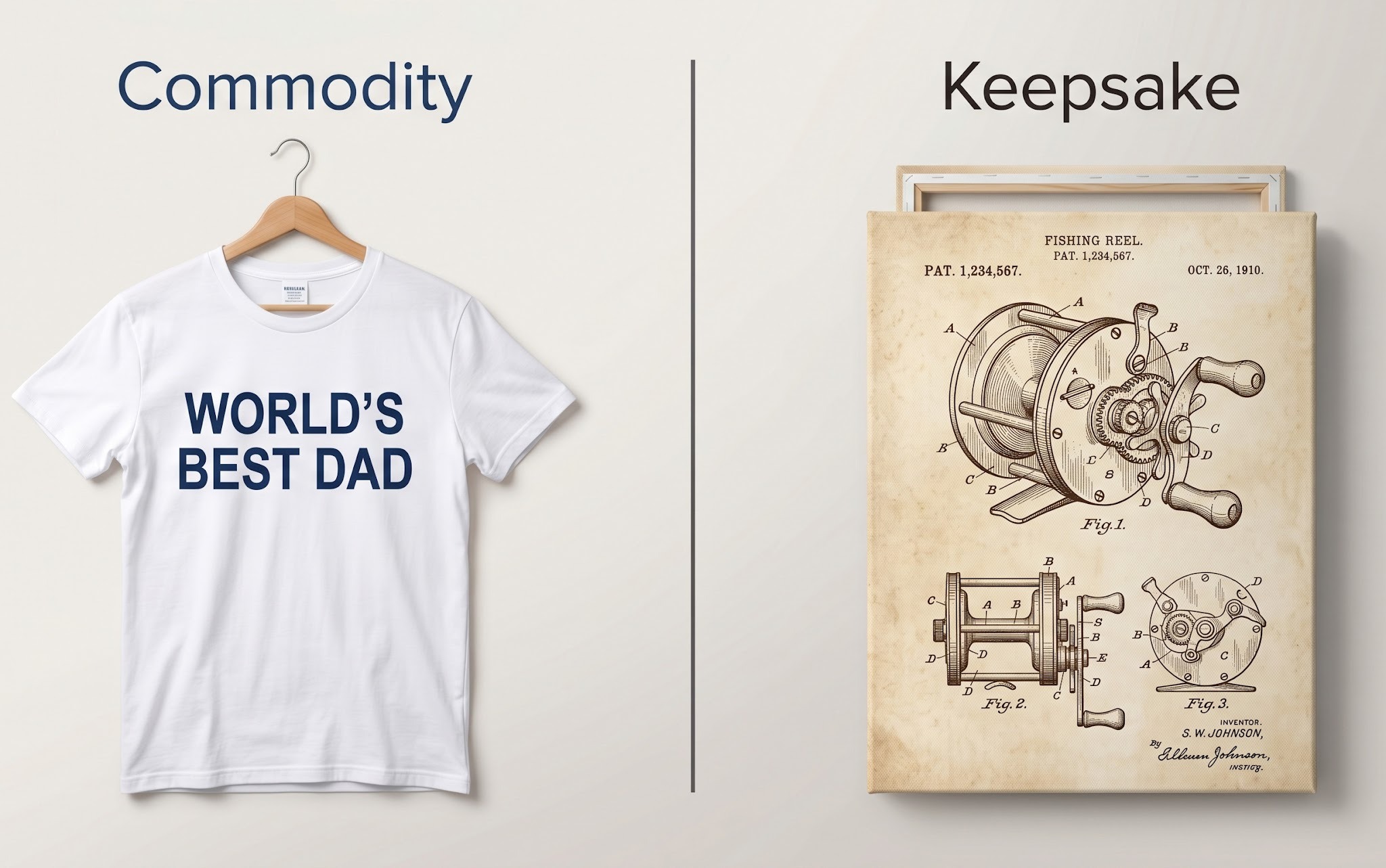
The days of winning Father's Day with a "World's Best Dad" shirt are over. Shoppers are fatigued by generic slogans and commodity tees. According to the National Retail Federation, Father's Day spending hit a record $24 billion in 2025, with the average shopper spending $199.38 per person—and 46% said finding a unique or different gift was their top priority. Buyers are actively hunting for something that stands out. Your job is to be that something.
Stop competing on price with basic tees. Unisex hoodies, canvas wall art, and large-format prints carry far higher perceived value—and that perception gap is exactly where your profit lives.
1.1. Lead with keepsakes.
Vintage "blueprint" or technical-sketch aesthetics—a patent drawing of a fishing reel, a car engine cross-section, or a grill schematic—appeal to a dad's identity without feeling cheesy. The winning angle: "A gift for the man who has everything but deserves more."
1.2. Bundle to raise AOV.
Pair a custom hoodie with a matching mug or tumbler at 15% off. Buyers who have already committed to one gift usually just need one small nudge to add a second item.
Moms and adult daughters are your primary buyers. Your content has two seconds to hit the appreciation nerve.
2.1. Hook formula that works. "The one thing he won't buy for himself, but will wear every single day." Lead with dad's selflessness—your product is the bridge.
2.2. UGC-style unboxing converts best. Film someone opening a personalized canvas print or workshop sign. The genuine reaction shot—surprise, a laugh, a long look—outperforms polished ad creative every time. Keep it raw.
2.3. The "relatable failure" angle. List the bad gifts dad has received in past years (socks, a tie, a generic card), then reveal your product as the fix. You never have to claim you're the best—the contrast does it for you.
2.4. Go deeper than "Dad." First Father's Day, Dog Dads, Grandpa, and Stepdad are high-emotion sub-niches with less competition and higher spend per buyer. Build separate content for each rather than one broad campaign.
For seasonal niche planning, the GearLaunch Holiday Selling Guide is your best starting point.
3.1. Target the hobby, not the holiday.
A fishing daughter isn't searching "Father's Day shirt"—she's searching "gift for fishing dad." Build campaigns around specific identity terms, not broad holiday keywords.
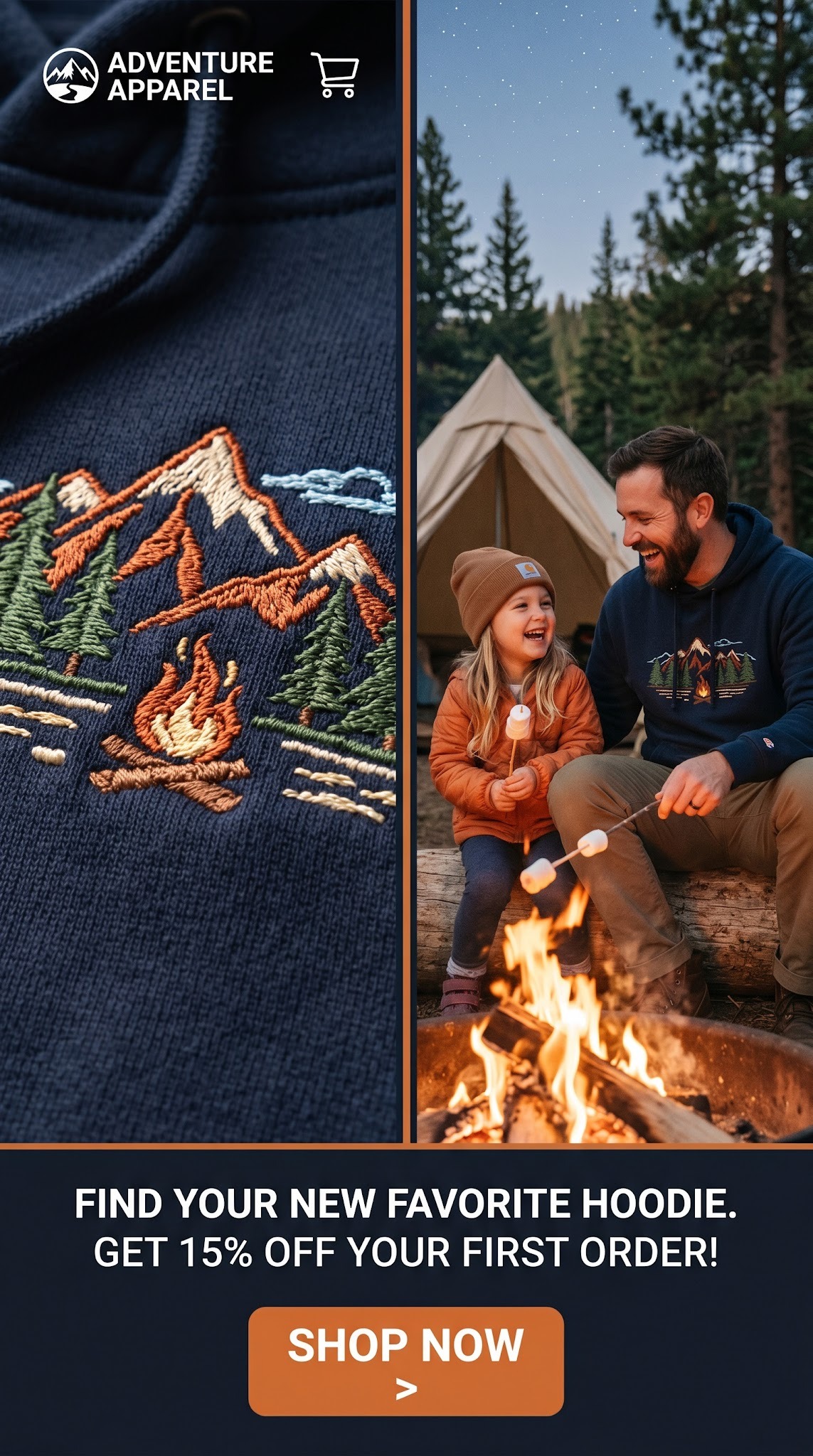
3.2. Run split-screen creatives.
Left: a close-up of embroidery stitching or 3D texture. Right: the product in a lifestyle setting—hoodie at a campfire, engraved tumbler on a workbench. One frame validates quality and real-world use simultaneously.
3.3. Use Dynamic Creative Optimization (DCO).
Test three headlines against two images and let the algorithm find the winner before you scale. Rotate: "He'll Actually Use This Every Day" / "For the Hardest Working Man in the Room" / "Best Gift He's Never Bought Himself." Run 5–7 days at low budget, then push the winner hard.
3.4. FOMO beats discounts.
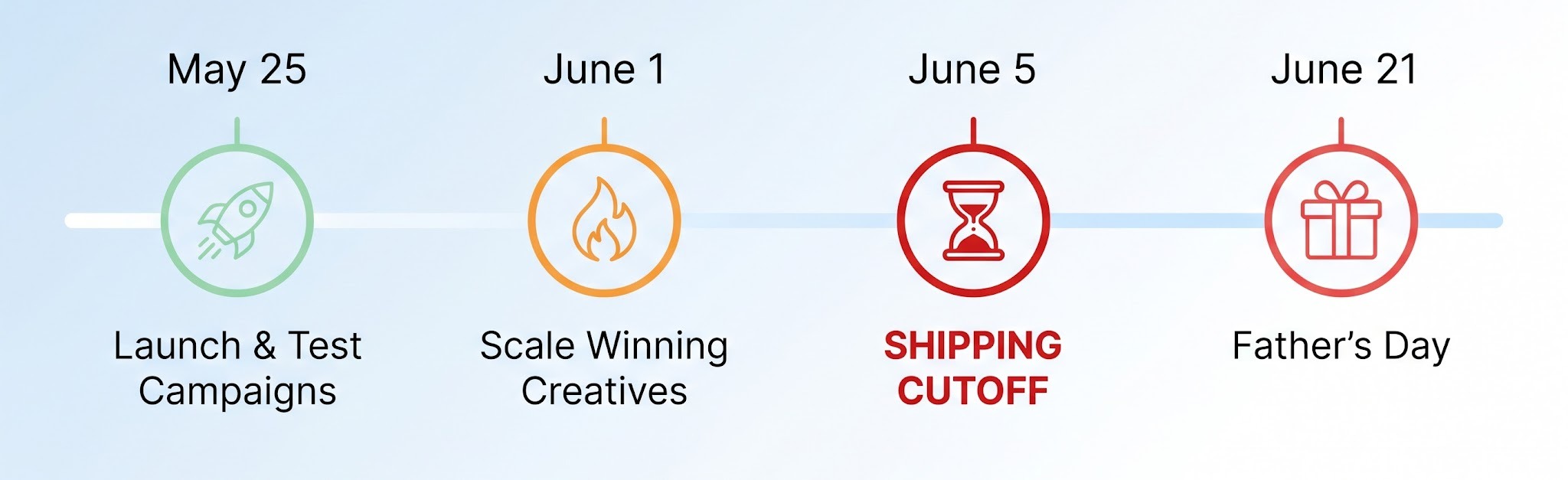
Ten days before your shipping cutoff, add a specific date to your copy: "Order by June 5th to guarantee delivery by Father's Day." A firm date creates urgency that a percentage discount never can—buyers can rationalize skipping a sale, but they cannot rationalize missing the holiday.
3.5. Use AI to multiply winning copy — here's the exact workflow.
Most sellers use AI to brainstorm product ideas and stop there. The real leverage is using it to systematically scale copy once you have a winner. Here is how to do it in three steps.
Step 1 — Extract what's actually working. Before you prompt anything, identify why your winning ad is converting. Ask yourself: Is it the emotional hook? The specificity of the niche? The urgency? Write that down in one sentence. Example: "'Best Gift He's Never Bought Himself' works because it frames the buyer as someone who finally gets dad something he deserves."
Step 2 — Give AI the right brief, not a vague request. Weak prompt: "Give me 5 variations of this headline." Strong prompt:
"I sell custom embroidered hoodies for fishing dads on a print-on-demand store. My best-performing ad headline is: 'Best Gift He's Never Bought Himself.' It works because it makes the buyer feel like they're finally doing right by dad. Write 5 new headlines using the same emotional logic—buyer as the hero, dad as deserving—but vary the angle. One should use urgency, one should call out the niche (fishing), one should focus on quality, one should use humor, and one should be curiosity-driven. Keep each under 9 words."
That brief gives AI a tone, a persona, a mechanic, and a constraint. You will get usable output instead of generic filler.
Step 3 — Use AI to scale across niches, not just copy. Once you have a winning design layout (say, the "Blueprint Dad" sketch aesthetic), prompt AI to generate the full niche expansion list:
"I have a winning Father's Day design concept called 'Blueprint Dad' — a vintage technical-sketch style showing tools or equipment related to dad's hobby. List 20 specific dad identity niches I should launch this design on, ordered by estimated audience size. For each niche, give me one product type that fits best and one ad headline using the 'Best Gift He's Never Bought Himself' emotional logic."
The output becomes your launch roadmap: 20 niches, 20 product pairings, 20 ready-to-test headlines—in under two minutes. Run the top 5 as test campaigns, let DCO pick the winner, then scale.
For launching your first campaign end-to-end, the beginner's guide to AOP campaigns has the full walkthrough.
4.1. Vertical scaling.
Winning "Fishing Dad" tee? Launch the same design on a 30oz tumbler, a Sherpa blanket, or a canvas print immediately. Buyers who love the concept are your easiest upsell.
4.2. Horizontal scaling.
Swap the niche label on your winning layout. "I'm a Carpentry Dad" → "I'm a Welding Dad" → "I'm a Gardening Dad." One template, ten niches, minimal design work.
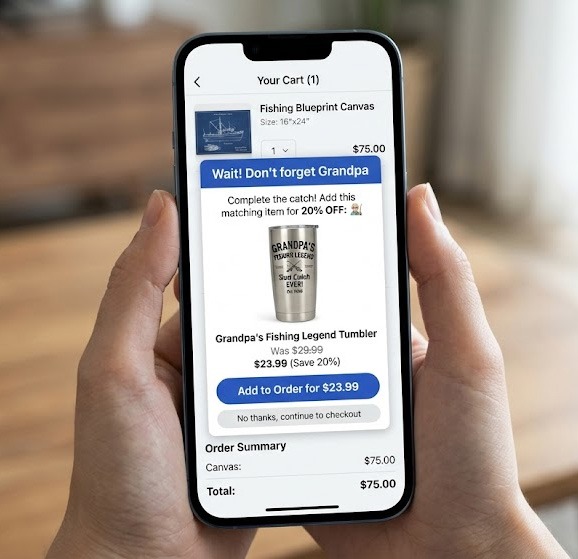
4.3. Post-purchase upsell for Grandpa.
Once someone buys for Dad, offer a 20% discount on a Grandpa-specific product. NRF data shows 6% of Father's Day buyers are purchasing for a grandfather—and most forgot about him until the last minute. Solve that automatically and double the cart at zero extra acquisition cost.
What are the best Father's Day POD products for 2026? Embroidered hoodies and hats, laser-engraved tumblers, canvas wall art, and Sherpa blankets. They read as premium gifts, not commodity items—and GearLaunch's new decoration methods give you an edge most competitors can't match yet.
What ad format works best for Father's Day? Split-screen creatives (product detail + lifestyle shot) paired with a hard shipping deadline in the copy. For video, raw UGC unboxing reactions outperform polished ads. Layer in DCO to let the algorithm pick your winner before you scale.
Should I target broadly or focus on sub-niches? Always go specific. "Fishing Dad," "Dog Dad," "First Father's Day," and "Grandpa" all convert at higher rates with less competition than the broad "Dad" bucket. The more specific the identity, the stronger the buyer's emotional connection to the product.
Father's Day 2026 is a $24 billion opportunity. Sellers who treat it as a premium gifting event—not a clearance rack—will own it. Pick your top three niches, apply the Blueprint or Embroidery aesthetic, and get your first test campaign live this week.
Explore the full GearLaunch product catalog · Create your first campaign today · Explore new decoration methods: Embroidery, Liquid 3D & Laser Engraving


.svg)
.svg)
.svg)